Showing posts with label MAPS. Show all posts

Wednesday, March 7, 2012

Tim Leary, Robert Wilson, 90’s Psychedelia

Sound Photosynthesis presents PSYCHEDELICS IN THE 1990'S - MAPS Conference Compilation. Historical. A gathering together to discuss the fate of psychedelics in the 1990's and their possible regulation or continued prohibition, are a group of speakers with divergent views and past experiences. Nevertheless, they share a deep commitment to the development of a constructive policy towards psychedelics. They graciously agreed to speak to help raise funds for psychedelic research, a field that has been at a standstill for a generation. Participants were: Timothy Leary, Alice Agar Wittine, Ram Dass, Rick Doblin, Mark Kleiman, Robert Zanger, Terence McKenna, Emerson Jackson, Ralph Matzner, Andrew Weil, Laura Huxley, Dennis McKenna, Jerome Beck, and Bruce Eisner. This is the closest you will get if you weren't there to begin with...if you were, this is better than your memories.

Robert Anton Wilson & Timothy Leary
@ The Bridge Psychedelic Conference 1991

Sound Photosynthesis presents Robert Anton Wilson & Timothy Leary @ The Bridge Psychedelic Conference 1991. For the full length recording please contact us at www.sound.photosynthesis.com

Wednesday, August 25, 2010

Andrew Weil: Maps Lecture - Video & Mp3

Speaker: Dr. Andrew Weil, M.D.
MAPS: Psychedelic Science in the 21st Century
The Future of Psychedelic & Medical Marijuana Research
April 16, 2010 - San Jose, California
CME Track 01 Disk 01-306. Runtime: 59:14
Thank Jan @ gnosticmedia: FREE MP3 DOWNLOAD right click, save as.

This is a great talk by Andy Weil featuring his unique perspective on the current state of Psychedelic Medicine & Medicinal Marijuana. The successes and the challenges that lay ahead. As leader in the field of integrative and alternative medicine he shares his valuable insights into clinical trials on mind-body medicine and tells how even after publishing solid findings from medical pioneers, most doctors will not change their practice.

Psychedelic Science in the 21st Century - Andrew Weil M.D.
From MAPS: Psychedelic Science

Forty years ago the U.S.led backlash against the possibility of researching the potential beneficial effects of psychedelics and marijuana. Many studies had shown psychedelics to be useful for managing anxiety and depression in terminal cancer patients, for treating alcoholism and opiate addiction and for catalyzing spiritual/mystical experience. At the same time, marijuana was found to be effective for relieving nausea and vomiting often associated with cancer and chemotherapy. Now that restrictions on research with these agents are easing, a new generation of investigators is continuing these studies, as well as looking at MDMA for PTSD, psilocybin for OCD, and marijuana for MS, chronic pain, PTSD, and other conditions. Many other possible therapeutic applications of psychedelics and marijuana needs to be carefully designed and conducted to avoid another backlash from anti-drug zealots. Along with some great personal stories. He is always a pleasure to hear. I think you will enjoy it.

All the best,
E

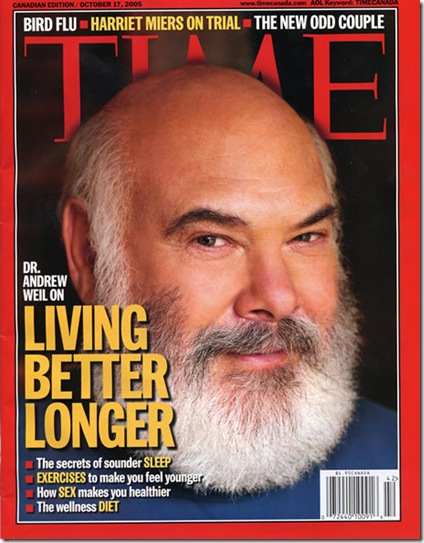
DrWeilTimeMag

www.GaianBotanicals.com

Wednesday, April 14, 2010

Psychedelic Information Theory by James Kent

Our friend James Kent will be presenting at MAPS conference in San Jose this week. He is also releasing the final version of 'Psychedelic Information Theory' online. I know this has been in the works for a long time and I am excited to read it. For those of you who are not familiar with his work. James is a writer and programmer living in Seattle, Washington. He is the former Editor of Psychedelic Illuminations Magazine and the former Publisher of Trip Magazine. He currently edits DoseNation.com the extensive multi-user weblog for drug news, culture, and humor, and is a regular contributor to H+ magazine.Psychedelic Information Theory Cover

Psychedelic Information Theory: Shamanism in the Age of Reason is an examination of the nonlinear dynamics of hallucination and altered states of consciousness. By deconstructing the systems of human perception and memory Psychedelic Information Theory quantifies the limits of psychedelic perception and describes the methods by which psychedelics alter consciousness, create new information, and affect human culture. By presenting these methods in physical terms Psychedelic Information Theory offers a rational and objective model for shamanic transformation and psychedelic therapy in modern clinical practice. Written by James L. Kent.

Read Online: Online Table of Contents »

Download eBook: Release Date May 2010

Buy Hardcopy: Release Date TBA

Version: Version 1.0, Public Online Release: April 2010

More at: psychedelic-information-theory.com

Monday, October 6, 2008

Horizons 2008: Perspectives on Psychedelics

The second annual Horizons forum is for learning about psychedelics. It seeks to open a fresh dialogue about psychedelics and challenges society to rethink their role in history, culture, medicine, spirituality and art. Featuring a small group of dedicated researchers and activists who have orchestrated a renaissance in psychedelic research that is re-shaping the public's understanding of these unique substances. Horizons brings together some of the brightest minds and boldest voices in this movement to share their research, insights and dreams for the future.

Streaming Audio 64kbps: Horizons 2008

To download, right click on any file size and save as:

Download the complete conference *
MP3 ZIP 64Kbps [165 MB]
MP3 ZIP VBR Mp3 [238 MB]
*The Shulgins talk must be downloaded separately.

Individual Audio Files 160Kbps MP3 64Kbps MP3 VBR MP3
Allan Hunt Badiner 55 MB 22 MB 31 MB
Dan Merkur 54 MB 22 MB 31 MB
Daniel Pinchbeck 52 MB 21 MB 30 MB
David Nichols 56 MB 22 MB 32 MB
Dmitri Mugianis 33 MB 13 MB 19 MB
Rick Doblin 57 MB 23 MB 33 MB
Robert Forte 45 MB 18 MB 26 MB
Roland Griffiths 61 MB 24 MB 36 MB
*The Shulgins N/A N/A 50 MB

Horizons

Tuesday, August 19, 2008

Psychedelic drugs could heal thousands

By: Andrew Feldmár
From: guardian.co.uk
Tuesday August 19 2008

Andrew Feldmár has been practising psychotherapy in Vancouver, Canada for 38 years. He writes:

There is a horrible sense of meaninglessness and chaos that comes from the extreme loneliness of being cut off. Trauma, whether sustained in the family, or in the military during combat, renders millions feeling unsafe, insecure, mistrustful, and in the end isolated, lonely and desperate. Judith Lewis Herman, who wrote the definitive book on trauma and recovery, stated that all so-called mental illness and suffering could be seen as a person's misguided attempt to survive trauma. Fear separates, love unites. We all wish to grow to freedom, to belong, to participate. Hatred is like gangrene, shame is deadly. Forgiveness is but a faint hope.

Sandoz began to market LSD in 1947 as a psychiatric panacea, the cure for everything from schizophrenia to criminal behaviour, sexual perversions, alcoholism, and other addictions. During a 15-year period beginning in 1950, research on LSD and other hallucinogens generated over 1,000 scientific papers, several dozen books and six international conferences, and LSD was prescribed as an adjunct of psychotherapy to over 40,000 patients. The current research using psychedelics heralds a reawakening to the magnificent healing possibilities of these now prohibited substances. After over 40 years of repression or oppression, Rick Doblin of Multidisciplinary Association for Psychedelic Studies (Maps), and others are spearheading a more enlightened, less hysterical and terrified approach to the use of these substances. I am participating in what hopefully will be Canada's first government approved clinical trials in 40 years, sponsored and organised by Maps, evaluating MDMA-assisted psychotherapy for subjects with treatment-resistant post-traumatic stress disorder.

There are many other applications of psychedelic psychotherapy, such as ibogaine, or ayahuasca for the treatment of substance abuse. Large numbers of people could benefit from the use of psychedelics as entheogens, introducing people to spiritual experiences, reducing pain and suffering due to isolation, by the irresistible realisation that each of us is a small part of something much greater than any of us, that separateness is an illusion, there is nothing to fear, and love is accessible, shame can be left permanently behind. Rites of passage, responsibly organised, could benefit everyone.

Despite prohibition, people have often asked me to attend their own psychedelic experiments, to keep them safe, to guide them towards liberation, the end of automatic habit patterns, kneejerk reactions, towards heartfelt responses, love, acceptance and forgiveness. After one session with MDMA, people were able to sustain insights gained, without further assistance from the drug. Psychotherapy proceeded faster and deeper than before: the debilitating effects of shame have been annulled, heavily defended hearts opened, and stayed open, and people acquired the ability to enjoy the sacrament of every living moment without distraction by past regrets or future worries. No small gains!

After three LSD sessions, a patient emerged from what was labelled chronic psychotic depression (she had attempted suicide three times, had been hospitalised, and given several courses of ECT, major antipsychotics and antidepressants), and was able to hold a job, derive pleasure from her days, and look forward to cultivating a varied garden of delights. She moved from cursing me for not letting her die to blessing me for the surprising freedom that opened up for her as a result of her LSD experiences. Psychotherapy, without LSD, would not have been enough, I'm afraid.

I can only hope that if new research with psychedelics proceeds in a responsible, careful and creative manner, the powers that be can begin to support and foster further research into this fascinating realm. I was 27 when I first tasted this incredible substance called LSD. Now I am 68 and for the last two years have been persona non grata in the US, because a border guard Googled my name, and found an article I wrote many years ago on entheogen-assisted psychotherapy. I hope I will be invited into the US before I die to teach professionals how to use psychedelics for the benefit of all.
Friday, June 20, 2008

NEW LSD assisted Psychotherapy study begins!

MAPS.ORG
To: EROCx1
Date: Fri, 20 Jun 2008
Subject: MAPS News: June 2008
First legal dose of LSD administered!


The New LSD Assisted Psychotherapy Study Begins! The first subject was treated in Peter Gasser, MDs LSD/end-of-life anxiety study in Switzerland on May 13th. This marks the beginning of what will become the first LSD-assisted psychotherapy study in over 36 years. While were sad that Albert Hofmann didnt live to actually see the first administration of LSD in this study, were glad he knew the study was fully approved and that the initial subject was going to be enrolled in the study soon. This subjects second and final experimental session will take place on June 27.

Dr. Gasser's protocol is for a preliminary 12 patient, double-blind study designed to gather basic information on safety and efficacy for this patient population. This study will also be used to guide in the development of our treatment approach. Though there has been substantial prior research with LSD in cancer patients that demonstrated safety and some degree of efficacy, that research was conducted over 36 years ago. In order to generate data that will be accepted by today's regulatory agencies, new protocols must meet modern drug development standards. Research must start from scratch and build carefully.

Dr. Gasser will be writing about the details of this initial research in his report for the upcoming Summer MAPS Bulletin.

So far, many generous MAPS supporters have pledged $125,000 of the $225,000 needed to complete this important study, and we all have faith that enough people will feel called to donate the remaining $100,000.

maps.org