THE STONED AGES explores the history of drugs. From the early cave dwellers who first stumbled upon psychedelic mushrooms to the over 6000-year-old tradition of opium cultivation in the East to a modern pharmaceutical industry with over 24,000 drugs on the market, drugs have played a role in our lives since well before recorded human history.
THE STONED AGES explores the reasons we've used drugs through the ages to heal our bodies and minds, to connect with a higher power, to feel better, for recreation, to escape, for performance enhancement, and even to prolong our lives while considering the devastating consequences that accompany the choice to use certain drugs. This fascinating, fresh, and insightful documentary will ask the question: overall, have drugs done more to help us or hurt us?
Hosted by Dean Norris, THE STONED AGES will journey through the millennia and look in on the greatest civilizations in human history to discover if drugs helped these societies flourish or fail and whether drug use was holy or hedonistic, a savior or a curse. How can drugs that are worshipped in one society be morally reprehensible and often illegal in another? And what causes some good drugs to go bad?
THE STONED AGES will interview the writers, historians, doctors, pharmaceutical reps, religious leaders, policy makers, FDA scientists, DEA representatives, and drug addicts who shape the often conflicting roles that drugs play in our lives today.
Drugs can kill and enslave, heal and provide hope, and alter our consciousness in deeply profound ways. THE STONED AGES will tell the story of how drugs have helped us become who we are.

Tuesday, March 6, 2012
History Channel: The Stoned Ages


Thursday, October 20, 2011
Timothy Leary Interviews
Timothy Leary on the Psychedelic Salon Podcast
Episode 284 Timothy Leary The Revolution Continues #1 Download
Episode 285 Timothy Leary The Revolution Continues #2 Download
Episode 286 Timothy Leary The Revolution Continues #3 Download
Download Mp3 To Download, right click & save target as..


Timothy Francis Leary (October 22, 1920 – May 31, 1996) was an American psychologist and writer, known for his advocacy of psychedelic drugs. During a time when drugs like LSD and psilocybin were legal, Leary conducted experiments at Harvard University under the Harvard Psilocybin Project, resulting in the Concord Prison Experiment and the Marsh Chapel Experiment. Both studies produced useful data, but Leary and his associate Richard Alpert were dismissed from the university.
Leary believed LSD showed therapeutic potential for use in psychiatry. He popularized catchphrases that promoted his philosophy, such as "turn on, tune in, drop out ", "set and setting", and "think for yourself and question authority". He also wrote and spoke frequently about transhumanist concepts involving space migration, intelligence increase and life extension (SMI²LE), and he developed the eight-circuit model of consciousness in his book Exo-Psychology (1977).
During the 1960s and 1970s, Leary was arrested regularly and was held captive in 29 different prisons throughout the world. President Richard Nixon once described Leary as "the most dangerous man in America". Leary was released from prison on April 21, 1976 by Governor Jerry Brown.
[NOTE: All quotations are by Dr. Timothy Leary]
“From my earliest years I wanted to figure out what life was about. I wanted to find out why I was here so that my actions and my desires would have some meaning. I don’t understand why everyone isn’t mainly and centrally a philosopher, because if you aren’t trying to figure that out for yourself you’re borrowing, or begging, or passively taking on someone else’s philosophy, and this may lead to situations that are unsatisfactory.”
“A philosopher never gets in trouble if his ideas are not new.”
"I spent four years in 29 jails and prisons on four continents."
“Looked at it pragmatically, the trick of taking intelligence tests is to get the highest score possible in terms of intelligence as defined by middle class intellectuals who designed the test.”
“It’s the nature of the game that a philosopher who’s proposing radical new ideas will be opposed by 80% of society.”
“My responsibility is to the genetic process and evolutionary process as I see it.”
“We have to be gentle with each other because we are going through a period of mutations.”
“I think, though, that there has never been a cultural change in history that was as profound, as pervasive, and as bloodless as the cultural revolution of the Sixties. By and large it was a smiling revolution.”
“By and large I’m very proud of what happened in the Sixties, every aspect of our culture was reformed and revised and reviewed and improved.”
“Now, LSD is a dangerous drug because it’s basically a post-terrestrial experience. And for caterpillars to start taking a butterfly drug, it gives you perspectives, and forecasts what’s to come.”
“There’s perhaps less than ten percent of the population who should even consider, under the best circumstances of disciplined control, to take this drug, because LSD is not a hedonistic, laid-back, multi-orgasm drug. It really isn’t. It’s a neurological experience. It’s a sixth circuit neuroelectric experience, and it’s basically preparation for post-terrestrial life.”
“To summarize, I’m an evolutionary agent using electromagnetic energies to broadcast evolutionary signals. The signals are ‘leave the planet’, ‘get smarter’, and ‘learn how to live as long as you want’.”
Leary makes a point about President Kennedy attempting to turn the solution to a bad economy away from war and into space.
Further information may be found at:
FREE Mp3 recordings are featured on the Psychedelic Salon Podcast
Dr. Timothy Leary on Wikipedia
The Timothy Leary Movie Archive
www.EROCx1.com
Friday, August 26, 2011
Dennis McKenna interview by Peter Gorman
 Subscribe to the Psychedelic Salon Podcast
Podcast 276 – “Peter Gorman Interviews Dennis McKenna Part 1” Download Mp3
Podcast 277 – “Peter Gorman Interviews Dennis McKenna Part 2” Download Mp3
To Download, right click & save target as..

Guest speakers: Peter Gorman and Dennis McKenna
Recorded in 1994
[NOTE: All quotations are by Dennis McKenna.]
“The idea that you could use these to actually explore other dimensions, real worlds that were outside the cognizance of our ordinary world, is really what I think fascinated me about psychedelics.”
“More than anything else, it [DMT] seemed to be not an experience, not a drug, but a place, an actual other dimension that you were plunged into.”
“In order to understand its limitations, I almost had to become the ‘enemy’. I had to become a scientist in order to understand the limitations of science.”
“I think that Ayahuasca is actually much more controllable than mushrooms. . . . I think that it is quite an amazing tool for self-understanding and for exploration. I think that it’s good for you, actually physically and psychologically good for you.”
“It’s no different than it ever was. When the Jesuits and the missionaries came to meso-America the first things to go, the first things to be stamped out was the knowledge of the sacred plants and the practice of using the sacred plants.”
“I think that Christianity linked with Calvinism has a hard time dealing with what you might call facts of biology, which in another phrase is sex, drugs, and rock ‘n roll. In some ways, life is about sex, drugs, and rock ‘n roll. Biology is about those things.”
“All experience is a drug experience. Whether it’s mediated by our own [endogenous] drugs, or whether it’s mediated by substances that we ingest that are found in plants, cognition, consciousness, the working of the brain, it’s all a chemically mediated process. Life itself is a drug experience.”
“He [Terence McKenna] will never let a fact get in the way of making a provocative statement. He’s a good story teller, but I think it’s important to remember that they are stories, and that he often makes mistakes in his lectures.”
“In that position, a guy who can pack the houses every time, I feel has a larger responsibility to the psychedelic community to refrain from making these completely off-the-wall comments, and to actually tell it like it is, not how he imagines it to be.”
“I’m sure that Terence views it as theater. I can’t believe that he takes what he says seriously. I mean, I can tell you that he doesn’t. Much of what he says he says it because it’s going to get a rise out of somebody. He’s always been that way.”
Peter Gorman
Writer, Explorer, Naturalist
Dennis McKenna
Writer, Ethnopharmacologist, Researcher, Explorer
Wednesday, March 16, 2011
High Society: Drugs in History, Science & Culture
High Society: The Central Role of Mind-Altering Drugs in History, Science & Culture
By: Mike JayAn illustrated cultural history of drug use from its roots in animal intoxication to its future in designer neurochemicals
• Featuring artwork from the upcoming High Society exhibition at the Wellcome Collection in London, one of the world’s greatest medical history collections
• Explores the roles drugs play in different cultures as medicines, religious sacraments, status symbols, and coveted trade goods
• Reveals how drugs drove the global trade and cultural exchange that made the modern world
• Examines the causes of drug prohibitions a century ago and the current “war on drugs”
Every society is a high society. Every day people drink coffee on European terraces and kava in Pacific villages; chew betel nut in Indonesian markets and coca leaf on Andean mountainsides; swallow ecstasy tablets in the clubs of Amsterdam and opium pills in the deserts of Rajastan; smoke hashish in Himalayan temples and tobacco and marijuana in every nation on earth.
Exploring the spectrum of drug use throughout history--from its roots in animal intoxication to its future in designer neurochemicals--High Society paints vivid portraits of the roles drugs play in different cultures as medicines, religious sacraments, status symbols, and coveted trade goods. From the botanicals of the classical world through the mind-bending self-experiments of 18th- and 19th-century scientists to the synthetic molecules that have transformed our understanding of the brain, Mike Jay reveals how drugs such as tobacco, tea, and opium drove the global trade and cultural exchange that created the modern world and examines the forces that led to the prohibition of opium and cocaine a century ago and the “war on drugs” that rages today.
Table of Contents
A Universal Impulse
High Societies - The Evolution of Drugs - Animal Intoxication - Drugs and Shamanism - Drugs and Culture - The Culture of Kava - The Culture of Betel - Drug Prohibitions - Drug Subcultures - The Cultures of Ecstasy
From Apothecary to Laboratory
What Is a Drug? - Drugs in Antiquity - Renaissance Herbals - Witches and Flying Ointments - The Invention of Laudanum - Linnaeus and the Enlightenment - The First Synthetic Drugs - Opium and the Romantics - The Club des Haschischins - Freud and Cocaine - Addiction and Drug Control - Mescaline, LSD, and Beyond - Drugs of the Future
The Drugs Trade
Drugs of the New World - The Psychoactive Revolution - Tobacco in China, Tea in Europe - The Opium Wars - The Anti-Opium campaign - Temperance and Prohibition - The 'War on Drugs' - Epilogue: The Decline of Tobacco
Download pre-publication sample pages in PDF format
About the Author:
Mike Jay is a leading specialist in the study of drugs across history and cultures. The author of Artificial Paradises, Emperors of Dreams, and The Atmosphere of Heaven, his critical writing on drugs has appeared in many publications, including The Guardian, The Telegraph, and The International Journal of Drug Policy. He sits on the editorial board of the addiction journal Drugs and Alcohol Today and on the board of the Transform Drug Policy Foundation. He lives in England.
Friday, November 26, 2010
USA to Ban Synthetic Cannaboids
From: DEA Public Affairs
November 24, 2010

DEA Moves to Emergency Control Synthetic Marijuana
Agency Will Study Whether To Permanently Control Five Substances.
WASHINGTON, D.C. – The United States Drug Enforcement Administration (DEA) is using its emergency scheduling authority to temporarily control five chemicals (JWH-018, JWH-073, JWH-200, CP-47,497, and cannabicyclohexanol) used to make “fake pot” products. Except as authorized by law, this action will make possessing and selling these chemicals or the products that contain them illegal in the U.S. for at least one year while the DEA and the United States Department of Health and Human Services (DHHS) further study whether these chemicals and products should be permanently controlled.
A Notice of Intent to Temporarily Control was published in the Federal Register today to alert the public to this action. After no fewer than 30 days, DEA will publish in the Federal Register a Final Rule to Temporarily Control these chemicals for at least 12 months with the possibility of a six-month extension. They will be designated as Schedule I substances, the most restrictive category, which is reserved for unsafe, highly abused substances with no medical usage.
Over the past year, smokable herbal blends marketed as being “legal” and providing a marijuana-like high, have become increasingly popular, particularly among teens and young adults. These products consist of plant material that has been coated with research chemicals that mimic THC, the active ingredient in marijuana, and are sold at a variety of retail outlets, in head shops and over the Internet. These chemicals, however, have not been approved by the FDA for human consumption and there is no oversight of the manufacturing process. Brands such as “Spice,” “K2,” “Blaze,” and “Red X Dawn” are labeled as incense to mask their intended purpose.
Since 2009, DEA has received an increasing number of reports from poison centers, hospitals and law enforcement regarding these products. Fifteen states have already taken action to control one or more of these chemicals. The Comprehensive Crime Control Act of 1984 amends the Controlled Substances Act (CSA) to allow the DEA Administrator to emergency schedule an abused, harmful, non-medical substance in order to avoid an imminent public health crisis while the formal rule-making procedures described in the CSA are being conducted.
“The American public looks to the DEA to protect its children and communities from those who would exploit them for their own gain,” said DEA Acting Administrator Michele M. Leonhart. “Makers of these harmful products mislead their customers into thinking that ‘fake pot’ is a harmless alternative to illegal drugs, but that is not the case. Today’s action will call further attention to the risks of ingesting unknown compounds and will hopefully take away any incentive to try these products.”
Wednesday, August 25, 2010
Andrew Weil: Maps Lecture - Video & Mp3
MAPS: Psychedelic Science in the 21st Century
The Future of Psychedelic & Medical Marijuana Research
April 16, 2010 - San Jose, California
CME Track 01 Disk 01-306. Runtime: 59:14
Thank Jan @ gnosticmedia: FREE MP3 DOWNLOAD right click, save as.
This is a great talk by Andy Weil featuring his unique perspective on the current state of Psychedelic Medicine & Medicinal Marijuana. The successes and the challenges that lay ahead. As leader in the field of integrative and alternative medicine he shares his valuable insights into clinical trials on mind-body medicine and tells how even after publishing solid findings from medical pioneers, most doctors will not change their practice.
Psychedelic Science in the 21st Century - Andrew Weil M.D.
From MAPS: Psychedelic Science
Forty years ago the U.S.led backlash against the possibility of researching the potential beneficial effects of psychedelics and marijuana. Many studies had shown psychedelics to be useful for managing anxiety and depression in terminal cancer patients, for treating alcoholism and opiate addiction and for catalyzing spiritual/mystical experience. At the same time, marijuana was found to be effective for relieving nausea and vomiting often associated with cancer and chemotherapy. Now that restrictions on research with these agents are easing, a new generation of investigators is continuing these studies, as well as looking at MDMA for PTSD, psilocybin for OCD, and marijuana for MS, chronic pain, PTSD, and other conditions. Many other possible therapeutic applications of psychedelics and marijuana needs to be carefully designed and conducted to avoid another backlash from anti-drug zealots. Along with some great personal stories. He is always a pleasure to hear. I think you will enjoy it.
All the best,
E
Thursday, July 1, 2010
Botany of Desire: Michael Pollan
Thursday, April 15, 2010
The Hemperor has joined the Ancestor Spirits

June 18, 1939 – April 15, 2010
Our community has lost another Great Elder.
I am sad to share that Jack Herer passed away this morning
R.I.P.
Jan Irvin of Gnostic Media is sharing a recording of Jack from the She Who Remembers audio archives in memory of The Hemperor
Read The Emperor Wears No Clothes
From: Portland Progressive Examiner
By: Michael Stone
Date: April 15, 2010
Jack Herer, much beloved Emperor of Hemp and marijuana hero. is dead at age 70. Herer was a tireless advocate in the battle to end marijuana prohibition. He was perhaps the world's most famous activist for the decriminalization of marijuana and the utilization of hemp.
Jack Herer was born June 18, 1939. A former Goldwater Republican, Herer became a political activist and the author of The Emperor Wears No Clothes, a book which is now a classic polemic in the effort to decriminalize marijuana.
Herer argued for the decriminalization and utilization of marijuana. Marijuana has been shown to be a renewable source of fuel, food, and medicine, and can be grown in virtually any part of the world. Herer was one of the first to show that the U.S. government deliberately hides the proof of marijuana's efficacy and utility. Herer devoted his life in support of cannabis, hemp and marijuana.
In later life Herer suffered several health problems. In 2000 Herer suffered a stroke and heart attack. After recovering the activist spoke with a stutter and walked with a limp. Last September 12 Herer collapsed backstage at "Hempstalk 2009" in Portland, Oregon.
After giving a fiery speech to the crowd on the future of hemp Herer suffered a heart attack and a significant loss of oxygen. Just minutes before his speech, Herer looked fit and said, "I'm getting better and better and better. I'm healthier than I've been..."
Herer passed away after months of serious health complications following his September collapse. Herer is a true American hero who spoke truth to power. He stood up for freedom while many others failed to do so. He was a good and noble man, and he will be missed.
www.jackherer.com
Friday, February 26, 2010
Lab analysis of JWH-018 & JWH-073 effect on brain
Wednesday, February 17, 2010
From: columbiamissourian.com

Marijuana, K2 and other synthetic marijuana variants contain active chemicals that cause psychoactive effects when consumed. They are part of a class of compounds known as cannabinoids. The cannabinoid in marijuana is the naturally occurring delta 9-tetrahydrocannabinol, or THC. The Johnson County Crime Lab in Kansas has identified two synthetic cannabinoids in K2: JWH-018 and JWH-073.
Cannabinoids act by binding to two types of nerve receptors known as CB1 and CB2. Both receptors are linked to proteins that regulate neurotransmission. ¦ Jashin Lin
COLUMBIA — A legal substance that mimics the effects of marijuana is responsible for some hospitalizations across the country but has not proven to be a significant presence in mid-Missouri.
K2, a substance that state Sen. Kurt Schaefer, R-Columbia, wants to ban in Missouri, is a “non-issue” in Columbia, said Jessie Haden, Columbia Police public information officer. The Columbia police have not received reports of incidents involving the legal substance.
K2 is a combination of plant materials and two synthetic cannabinoids, according to Jeremiah Morris, a forensic scientist for the Johnson County Criminalistics Laboratory in Mission, Kan. The laboratory, an arm of the Johnson County Sheriff's Department, ran an analysis on K2 in October 2009 after noticing an increase in use in Johnson County.
“They found K2 to contain lab-produced drugs that act on the same part of the brain as marijuana,” Morris said.
But the compounds in K2 are three to five times more potent than THC found in marijuana. Morris compared the effects of K2's compounds to a lock-and-key mechanism in which the lock is a receptor site of the brain and the key is the drug's compounds. The "keys" in K2 compounds are keys that fit the brain's "lock" better than those in marijuana.
The psychoactive drug can cause users to experience rapidly increased heart rates, loss of consciousness, paranoia and, occasionally, psychotic episodes. One hospitalized user claimed he could see his heart beating out of his chest. Individuals have different reactions to the drug, though users do not have to smoke excessively to experience potentially harmful symptoms, Morris said.
K2 compounds were produced in a laboratory at Clemson University in 1995 by a group of research students working under professor John Huffman, who was trying to explore how drug substances latch on to receptor sites in the brain. Morris said he believes that manufacturers of K2 created and sold the substance for drug use by studying Huffman’s research, published in 1998.
Morris said there has been little scientific research exploring the toxicity of K2 in the United States, but hospitalization cases have appeared in Florida, Maine and Arkansas, in addition to St. Louis, Springfield and Kansas City.
Scientific studies on K2 compounds were done using a drug called Spice that emerged in Germany in 2008. It was made up of plant materials and the same compounds as K2 and caused psychotic episodes that resulted in increased hospitalizations and accidents, Morris said.
These studies showed that those who ingest K2 compounds exhibit typical drug dependency signs, withdrawal symptoms and addictive behaviors associated with other drug use. Morris said that K2 and Spice are basically the same product with different names.
“We’re seeing exactly what Germany saw in 2008 and 2009,” Morris said.
Morris said that as people have begun to smoke K2 instead of marijuana, calls to poison control centers and emergency rooms have increased.
Though K2 has psychoactive properties, it is currently legal in Missouri and federally. Schaefer and other legislators hope to change this.
The House Public Safety Committee unanimously voted to pass a bill that, among other things, would make one of the ingredients in K2 illegal.
The bill's next step is passage by the House Rules Committee. It could then go to a vote of the whole body.
Kim Dude, assistant director of the MU Wellness Resource Center said the center has no plans to incorporate K2 into their educational programs until more information is found about the drug.
“The noise is from the media; it’s not from the students,” Dude said. “I think a lot of people are unaware.”
Also see: Bouncing Bear Botanicals Raided
Wednesday, December 9, 2009
Czech government defines rules of legal drug possession

The cabinet was today also expected to discuss artificial drugs and a permitted amount of these drugs in people's possession.
However, it postponed the debate for two weeks, the source said.
The new Penal Code, which will take effect on January 1 is designed to specify the government's directive. It contains a special provision on the growth of hemp and magic mushrooms.
The government today also approved a directive on the use of anabolics and the list of diseases that will be considered congenial, according to the criminal law.
The law distinguishes between the possession of marijuana and hashish for people's personal needs, for which they will face up to one year in prison, from the possession of other drugs for which they can receive up to two years in prison.
According to the Justice Ministry's proposal that the government did not approve today, the possession of over 15 grams of dried marijuana or over two grams of methamphetamine (pervitine), cocaine and heroin will be punishable.
The tolerated amount of drugs in people's possession is at present defined by police internal directives. No one thus knows precisely what amount is considered an amount "larger than a small amount of drug," the possession of which is punishable by the law.
If the government approves the ministry's proposal without changes in two weeks, people will be able to have four pills of ecstasy in their possession and up to five grams of hashish.
Prague - The Czech government today approved the list of hallucinogenic plants and mushrooms, including hemp, coca, mescaline cactus and magic mushrooms, and decided that people would be allowed to grow up to five pieces of such plants and keep 40 magic mushrooms at home, a CTK source said.
From ČTK
Friday, May 29, 2009
The good old days of Medicine
Marijuana, Cocaine, Morphine, Heroin, Amphetamine and even LSD were once medically accepted and offered as miracle cures up until this past century. These same substances that are now illegal and stigmatized will send anyone in the possession of them to prison. During this period numerous pharmaceutical manufacturers proudly proclaimed that their products contained these and other drugs. Below are a some interesting examples of these medicines.
Cocaine based Medicine
Cocaine was sold over-the-counter until 1914. It was widely used in tonics, toothache cures, patent medicines, and chocolate cocaine tablets. Prospective buyers were advised (in the words of the pharmaceutical company Parke-Davis) that cocaine "could make the coward brave, the silent eloquent, and render the sufferer insensitive to pain".

Cocaine toothache drops (circa 1885) were popular for children.
Not only would the medicine numb the pain, but it could also put the user in a "better" mood.

Metcalf's Coca Wine was one of a large number of cocaine-containing wines available on the market. All claimed medicinal effects, although they were undoubtedly consumed for their "recreational" value as well.

Vin Mariani (Circa 1865) was the leading Coca Wine of its time. Pope Leo XIII reportedly carried a hipflask of Vin Mariani with him.
His Holiness even awarded a Vatican gold medal to its creator, Angelo Mariani.


This coca wine was made by the Maltine Manufacturing Company (New York). The dosage indicated on the back of the bottle reads: "A wine glass full with, or immediately after, meals. Children in proportion."

Cocaine-containing throat lozenges (circa 1900) were "indispensable for singers, teachers, and orators." In addition to quieting a sore throat, these lozenges undoubtedly provided the "pick-me-up" to keep these professionals performing at their peak.

A paperweight advertisement for C.F. Boehringer & Soehne (Mannheim, Germany), "largest makers in the world of quinine and cocaine." This chemical manufacturer was proud of its leading position in the world's cocaine market.
Opiate based Medicine
formulations containing Opiates were probably even more widely employed than those containing cocaine. Laudanum had been in use for over two centuries, and the isolation of morphine in the early 19th century and the later development of heroin were lauded as even more effective remedies.
Modern authors usually suggest that widespread opium use was a major health problem during the 19th century. However, the use of opiates must be kept in proper perspective with other contemporary health problems. Mortality from cholera, malaria, and dysentery was very high, and opiates provided some relief from these illnesses (Opiates remain the most effective treatment for dysentery.). Some authors have suggested that the easy availability of opiate-based medicines saved more lives than it took. As the deleterious effects of chronic opiate use became increasingly recognized during the late 19th century, several factors helped ease the need for opiates: the improvements in sanitation diminished cholera and dysentery, the drainage of swamp lands decreased malaria, and the introduction of acetylsalicylic acid (aspirin; 1899) provided an alternative medicine for moderate pain relief.
This bottle of Stickney and Poor's paregoric (mixture of opium and alcohol) was distributed much like the spices for which the company is better known. Doses for infants, children, and adults are given on the bottle. At 46% alcohol, this product is 92 proof which is pretty potent in itself.

Bayer Heroin bottle. Up until 1910 heroin was marketed as a non-addictive morphine substitute and cough medicine for children! Heroin became it illegal to manufacture in 1924.

This ad is for Glyco-Heroin manufactured by Martin H. Smith Company (New York). Heroin was widely used not only as an analgesic but also as a remedy for asthma, coughs, and pneumonia. Mixing heroin with glycerin (and often adding sugar or spices) made the bitter-tasting opiate more palatable for oral consumption.

This National Vaporizer Vapor-OL (opium) Treatment no. 6 for asthma may have provided a unique method of essentially "smoking" opium. The volatile liquid was placed in a pan that was heated by a small kerosene lamp (see below). Other substances were also used in these early (c. 1890) vaporizers, but this mixture probably ensured plenty of visitors for the spasmodically affected.

Tolu & Dovers cough syrup contained Cannabis and Opium as major constituents and was manufactured by Columbus Pharmacal Co.
Above is a photo of the original Medical Marijuana, which is finally being re-accepted as part of Western Medicines Pharmacopeia. This photo shows a bottle of Cannabis Indica Fluid Extract, manufactured by American Druggists Syndicate.

Medical LSD
Sandoz Delysid (LSD 25) D-lysergic acid diethylamide tartrate
Sugar-coated tablets containing 0.025 mg. (25 ug.)
Ampoules of 1 ml. containing 0.1 mg. for oral administration.
The solution may also be injected s.c. or i.v. The effect is identical with that of oral administration but sets in more rapidly.
INDICATIONS AND DOSAGE
a) Analytical psychotherapy, to elicit release of repressed material and provide mental relaxation, par- ticularly in anxiety states and obsessional neuroses. The initial dose is 25 ug. (1/4 of an ampoule or 1 tablet). This dose is increased at each treatment by 25 ug. until the optimum dose (usually between 50 and 200 ug.) is found. The individual treatments are best given at intervals of one week.

Amphetamine was synthesized too late to have the widespread applications enjoyed decades earlier by cocaine and the opiates. It was, however, marketed in products commonly used to relieve head congestion and asthma. Amphetamine continued to be employed as a popular prescription diet-aid into the 1970s.

Benzedrine (racemic amphetamine) inhalers were available over-the-counter until the early 1950s. Some airlines even gave them out to passengers to minimize discomfort when the plane was landing and taking off. The Smith, Kline, and French advertisement proudly proclaims that over 10 million Benzedrine inhalers had been shipped by 1938, only 7 years after the product's introduction. This may have even outpaced McDonald's hamburger sales during their early expansion (Remember the "over x million hamburgers sold" signs?).

Recommended reading:
Monday, March 9, 2009
Feds to end raids on medical MJ dispensaries?
Bob Egelko, Chronicle Staff Writer

A step in the right direction.
U.S. Attorney General Eric Holder is sending strong signals that President Obama - who as a candidate said states should be allowed to make their own rules on medical marijuana - will end raids on dispensaries in California.
Bill Piper, national affairs director of the Drug Policy Alliance, a marijuana advocacy group, said the statement is encouraging.
"I think it definitely signals that Obama is moving in a new direction, that it means what he said on the campaign trail that marijuana should be treated as a health issue rather than a criminal justice issue," he said.
Piper said Obama has also indicated he will drop the federal government's long-standing opposition to health officials' needle-exchange programs for drug users.
During one campaign appearance, Obama recalled that his mother had died of cancer and said he saw no difference between doctor-prescribed morphine and marijuana as pain relievers. He told an interviewer in March that it was "entirely appropriate" for a state to legalize the medical use of marijuana "with the same controls as other drugs prescribed by doctors.
Monday, December 1, 2008
The world's oldest stash of cannabis!

2,700 Year Old
Pot stash discovered!
By: THE CANADIAN PRESS
27th November 2008
OTTAWA – Researchers say they have located the world's oldest stash of marijuana, in a tomb in a remote part of China.
The cache of cannabis is about 2,700 years old and was clearly "cultivated for psychoactive purposes," rather than as fibre for clothing or as food, says a research paper in the Journal of Experimental Botany.
The 789 grams of dried cannabis was buried alongside a light-haired, blue-eyed Caucasian man, likely a shaman of the Gushi culture, near Turpan in northwestern China.
The extremely dry conditions and alkaline soil acted as preservatives, allowing a team of scientists to carefully analyze the stash, which still looked green though it had lost its distinctive odor.
"To our knowledge, these investigations provide the oldest documentation of cannabis as a pharmacologically active agent," says the newly published paper, whose lead author was American neurologist Dr. Ethan B. Russo.
Remnants of cannabis have been found in ancient Egypt and other sites, and the substance has been referred to by authors such as the Greek historian Herodotus. But the tomb stash is the oldest so far that could be thoroughly tested for its properties.
The 18 researchers, most of them based in China, subjected the cannabis to a battery of tests, including carbon dating and genetic analysis. Scientists also tried to germinate 100 of the seeds found in the cache, without success.
The marijuana was found to have a relatively high content of THC, the main active ingredient in cannabis, but the sample was too old to determine a precise percentage.
Researchers also could not determine whether the cannabis was smoked or ingested, as there were no pipes or other clues in the tomb of the shaman, who was about 45 years old.
The large cache was contained in a leather basket and in a wooden bowl, and was likely meant to be used by the shaman in the afterlife.
"This materially is unequivocally cannabis, and no material has previously had this degree of analysis possible," Russo said in an interview from Missoula, Mont.
"It was common practice in burials to provide materials needed for the afterlife. No hemp or seeds were provided for fabric or food. Rather, cannabis as medicine or for visionary purposes was supplied."
The tomb also contained bridles, archery equipment and a harp, confirming the man's high social standing.
Russo is a full-time consultant with GW Pharmaceuticals, which makes Sativex, a cannabis-based medicine approved in Canada for pain linked to multiple sclerosis and cancer.
The company operates a cannabis-testing laboratory at a secret location in southern England to monitor crop quality for producing Sativex, and allowed Russo use of the facility for tests on 11 grams of the tomb cannabis.
Researchers needed about 10 months to cut red tape barring the transfer of the cannabis to England from China, Russo said.
The inter-disciplinary study was published this week by the British-based botany journal, which uses independent reviewers to ensure the accuracy and objectivity of all submitted papers.
The substance has been found in two of the 500 Gushi tombs excavated so far in northwestern China, indicating that cannabis was either restricted for use by a few individuals or was administered as a medicine to others through shamans, Russo said.
"It certainly does indicate that cannabis has been used by man for a variety of purposes for thousands of years."
Russo, who had a neurology practice for 20 years, has previously published studies examining the history of cannabis.
"I hope we can avoid some of the political liabilities of the issue," he said, referring to his latest paper.
The region of China where the tomb is located, Xinjiang, is considered an original source of many cannabis strains worldwide.
Posted by our friend James Kent on DoseNation.com
Tuesday, November 4, 2008
Dr. Timothy Leary: The League for Spiritual Discovery

From: The Psychedelic Salon
Subscribe: FREE
FREE Download: MP3
Right click, save target as.
Macs - Ctrl-Click, select.
Jan 1966 Radio interview with Dr. Timothy Leary and Elsa Knight Thompson.
PROGRAM NOTES:
[NOTE: All quotations below are by Dr. Timothy Leary]
"Psychedelic art is the public face of the communication device of our new religion."
"Man’s attempt to turn on just staggers the imagination. There’s hardly anything that hasn’t been used one time or another, or in one culture or another, to get this [psychedelic] experience."
"We don’t care what method people use [to turn on]. We treasure and glorify any method that can get you high, that can turn you on. But we also insist that no one tell us that we can’t use our sacraments that seem to work for us."
"We’re convinced, and I think it wouldn’t be hard to prove my point, that most Americans are involved in a meaningless, robot, assembly-line series of activities. They don’t really know what they’re doing and why they’re doing it, but they’re just pushed off to this assembly-line and off they go."
"[By drop out] we mean drop out of the meaningless and tune in to the productive."
"You have to go out of your mind to come to your senses."
"There’s no more room for mythological, supernatural religious teachers."
"We use this word ‘psychosis’ the way we used the word ‘devil’ or ‘devil-possession’ or ‘witchcraft’ two or three or four or five hundred years ago."
"When the time comes, let your kids turn you on. That’s my message to the middle-age, middle-class, whiskey-drinking American suburban family."
"So jail to us is not a middle class disgrace. Here I am, a former Harvard professor, I’ve been arrested three times in the last year. Isn’t that disgraceful? To me that just means I’m doing my job. And if I don’t get the establishment a little worried, I wonder if my message is not getting through."
Wednesday, July 9, 2008
Prohibition: Its Roots and Bitter Fruit

By: Peter Webster
From: psychedelic-library.org
Download: mp3 audio
Download: text file - PDF file
Peter Webster's lecture presented at
ENCOD's Drug Peace Conference
a counter-event to the annual meeting of the
UN Commission on Narcotic Drugs
Vienna, 7-9 March 2008
"According to recent findings by a few intrepid researchers including Carl Ruck of Boston University, the Catholic Church was, however, no stranger to the use of psychoactive plants for attaining religious ecstasy. A long tradition of such use by the Church elite now appears to be the case, but the practices were reserved for only the highest echelons within the church, and completely prohibited for the general masses of Christians. The inner sanctum of the Catholic Church realized, of course, that if Christians were able to attain religious ecstasy and insight on their own with the aid of psychoactive plants, then the authority of the Church would be severely undermined, and their political quest for world domination damaged if not destroyed.
A main purpose of the Holy Inquisition was therefore to stamp out uses of psychoactive plants wherever they were to be found. And that included branding as heretics those European outsiders such as the medieval practitioners of the ancient traditions of witchcraft and alchemy, the pursuits of whom we now know were concerned with the use of psychoactive plants such as mandrake, belladonna, and other native European drug-plants. The doctrine of the Church therefore became one of public repudiation of drug use as a form of Gnostic heresy, while at the same time secretly preserving the knowledge of that use for the Church elite."
By: Peter Webster
Listen to the complete presentation: mp3 audioRead the complete presentation: text file - PDF file
Related videos from psychedelic-library.org
Psychedelics in Eden
The First Supper - by Peter Webster
A lecture first presented to the SISSC, Perinaldo, Italy, 2004.
Presented at the Albert Hofmann Celebration, Basel, 2006
RealVideo format, 1/4 resolution - 1 hour duration - filesize: 105MB
Heretical Visionary Sacraments Amongst the Ecclesiastical Elite
by Carl A.P. Ruck & Blaise Daniel Staples
A video slideshow narrated by Carl A.P. Ruck
RealVideo format, 1/4 resolution - 1 hour duration - filesize: 88MB
Melusina of Plaincourault
by Carl A.P. Ruck, Blaise Daniel Staples, and José Alfredo González Celdrán
A video slideshow narrated by Carl A.P. Ruck
RealVideo format, 1/4 resolution - 1 hour duration - filesize: 88MB
The above RealVideo's are available as a full-frame DVD (720x576 PAL) info: psychedelic@wanadoo.fr
Saturday, May 17, 2008
Amanda Feilding: Expanded Consciousness and its Importance
Expanded Consciousness and its Importance to Survival
As presentated at the
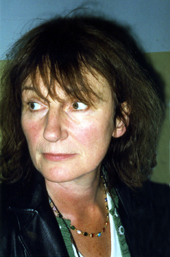
This talk from the 2008 World Psychedelic forum is given by Amanda Feilding of the Beckley foundation, entitled 'expanded consciousness and its importance to survival'.
Amanda talks about the specturm of states of consciousness, the benefits of expanding and altering consciousness, the neurophysiology of altered states, prehistoric man, altered consciousness and cultural evolution, the psychedelic transformation of the 1960s, the Eleuinian mysteries, Benny Shannon's writings on the use of Acacia and Harmal (ayahuasca analogue) in ancient Egypt, the potential benefits of psychedelics for modern society, the ability of psychedelics to increase blood flow to the brain, the importance of increased cerebral circulation, the scientific understanding of consciousness, Beckley foundation's research projects, obstacles to scientific research into psychedelics, LSD assisted psychotherapy, using psilocybin to help with addiction problems and represssed memories, development of new antidepressant medications based on ketamine research, the antipsychotic component of cannabis, using an EEG on people meditating, trebination to increase blood supply to the brain, potential for use to delay the onset of dementia in old age, bringing the light of reason to drug policy, the evidence based approach to drug policy, the lack of attention being paid to the potential benefits of illegal drugs such as LSD and ecstasy, the road to a 'new Eleusis'.
In recent years, Amanda has taken part in different conferences where she has given the following talks:
- Mind States II - Berkeley, California (May 2001), ' Blood & Consciousness 'The Search for Expanded Consciousness from Paleolithic to Modern Man
- Exploring Consciousness Conference - Bath (June 2004),'How Altered States of Consciousness Shape Society' or Listen to Amanda's Talk on Mp3.
- Trialogue III - Beckley Park, Oxford (December 2004), ' Consciousness & Psychedelics'
- International Symposium on Albert Hofmann's 100th Birthday - Basel (January 2006), 'LSD, Precious Key of Neuroscience '
To watch the whole program, click here