The Cosmic Giggle is an experimental documentary film that explores the human energy field's dynamic relationship with our environment. Naturally as human beings, we are connected to a vast network of fluid information inherent to the world around us. When we are children, we are open to this field through simple innocent observance, but because of our collective evolution towards a dominating and fixated worldview, this perception becomes veiled. This film reveals how this process takes place and provides keys for returning to a more primal and authentic experience of our reality.
THE STONED AGES explores the history of drugs. From the early cave dwellers who first stumbled upon psychedelic mushrooms to the over 6000-year-old tradition of opium cultivation in the East to a modern pharmaceutical industry with over 24,000 drugs on the market, drugs have played a role in our lives since well before recorded human history.
THE STONED AGES explores the reasons we've used drugs through the ages to heal our bodies and minds, to connect with a higher power, to feel better, for recreation, to escape, for performance enhancement, and even to prolong our lives while considering the devastating consequences that accompany the choice to use certain drugs. This fascinating, fresh, and insightful documentary will ask the question: overall, have drugs done more to help us or hurt us?
Hosted by Dean Norris, THE STONED AGES will journey through the millennia and look in on the greatest civilizations in human history to discover if drugs helped these societies flourish or fail and whether drug use was holy or hedonistic, a savior or a curse. How can drugs that are worshipped in one society be morally reprehensible and often illegal in another? And what causes some good drugs to go bad?
THE STONED AGES will interview the writers, historians, doctors, pharmaceutical reps, religious leaders, policy makers, FDA scientists, DEA representatives, and drug addicts who shape the often conflicting roles that drugs play in our lives today.
Drugs can kill and enslave, heal and provide hope, and alter our consciousness in deeply profound ways. THE STONED AGES will tell the story of how drugs have helped us become who we are.
Final 24 charts the life of this troubled genius and uncover why a bullet to the head was the only way out. This compelling documentary series unlocks the hidden secrets, psychological flaws and events that result in the tragic deaths of famed notorious and the iconic. Every episode maps out the final 24 hours of a different famous person's life. The series weaves the star's back-story with events from their last day, which lays bare the threads of fate that led inextricably from childhood to the moment of death. These are no ordinary biographies. They're psychological detective stories attempting to uncover the mystery of why the celebrity died. Hunter S. Thompson was an author trapped in the body of a rock star. His drug-fuelled adventures were legendary and became the basis of one of the classics of 20th century literature. Thompson's constant questioning of authority and wild antics made him a hero for a generation of rebels across the globe. But in the end it wasn't enough. A lifetime of alcohol and drug abuse was taking their toll and at 67, with a broken leg, two hip operations and in chronic pain Thompson could no longer live up to the legend he'd created. On February 20, 2005, he decided to end it all with one of his favorite possessions, a Smith and Wesson 45. Final 24 charts the life of this troubled genius and uncover why a bullet to the head was the only way out.
The Marketing of Madness is the definitive documentary on the psychiatric drugging industry. Here is the real story of the high income partnership between psychiatry and drug companies that has created an $80 billion psychotropic drug profit centre.
But appearances are deceiving. How valid are psychiatrists’ diagnoses – and how safe are their drugs? Digging deep beneath the corporate veneer, this three-part documentary exposes the truth behind the slick marketing schemes and scientific deceit that conceal dangerous and often deadly sales campaigns.
In this film you’ll discover that… Many of the drugs side effects may actually make your ‘mental illness’ worse. Psychiatric drugs can induce aggression or depression. Some psychotropic drugs prescribed to children are more addictive than cocaine. Psychiatric diagnoses appears to be based on dubious science. Of the 297 mental disorders contained with the Diagnostic and Statistical Manual of Mental Disorders, none can be objectively measured by pathological tests.
Mental illness symptoms within this manual are arbitrarily assigned by a subjective voting system in a psychiatric panel. It is estimated that 100 million people globally use psychotropic drugs.
The Marketing of Madness exposes the real insanity in our psychiatric ‘health care’ system: profit-driven drug marketing at the expense of human rights.
This film plunges into an industry corrupted by corporate greed and delivers a shocking warning from courageous experts who value public health over dollar.
When John Taylor Gatto resigned from his job, he did so on the Op-Ed page of the Wall Street Journal. At the time, he was NYC and New York State School Teacher of the Year. Herein, with more than 200 footnotes, and more than 30 books references; this 5-hour interview session, memorializing Gatto’s research, publications, and life experiences, forms an impeccable resource and reference library of the Underground History of American Education. Each hour focuses on examining the evolution of ideas; which manifest today in the phenomenon of public schooling. By dissecting the history and presenting you with the references, you’re left at the end of each hour; with a copious amount of information, from which you can continue your own personal journey of discovery.Please consider making a purchase or donating to the Tragedy & Hope Community
1. Arriving at abstraction, critical thinking and draft evaluations
2. The metaphor of schooling and the school of fish. Collective expectations vs. individualism, identity and uniqueness. Volition in group selection. Language theft, Newspeak, Lippmann and the schooling transformation. The language of education becomes respected out of ritual.
3. Awareness of contrary dynamics leading to theories of dialectics. Intellectual self defense, questioning authority. The malign intent against individuality. Reality testing. Conditioned from infancy to shave the truth. Education begins with mistrust.
4. Outcome based education, servile arts vs. independent self sufficiency and life-long learning. The logic of schooling and asking "why?" Teaching experiences spanning 30 years including Gold Coast, Harlem, and Spanish Harlem and the disparity between what Gatto accomplished vs. the Protocol. Teaching his class to asking questions. Visiting delegations. The ideal of 120 individual curricula. Learning more from students than from the Ivy League.
5. The extension of childhood and the economics of planned obsolescence. Lincoln's Mudsill Moment in 1859. The British are financing the whole western movement and attempting to reinstall their class system. Americans, independent livelihoods and the incompatibility with the concept of the proletariat based factory systems. Private independent systems of value. Slavery, wives of the Plantation owners and the causes of the Civil War. Northern industrialists wage slavery and deadwood.
6. The pulpit and the press. William Rainey Harper and the Chautauqua's. Mass media. Ideas and ways of thinking introduced to the "best" people. A second American Revolution, controlling public opinion, mechanizing workforces. Carnegie and the elimination of the need for skilled labor.
7. Leverage and the alchemy of wealth, power, fame. Global Governance and Rockefeller lineage. Rockefeller rape allegations. Horatio Alger. "The Rise of the Dangerous Class in New York City", Adoption institutions, Lowering unit value of labor by encouraging women in the workforce, social work industry rises. Children of Labor sent west in box cars. Lutheran parents with Episcopal Hierarchy, farmers, free labor. Breaking the parental bond. The theory of "Mirror Neurons."
8. School and un-making connections. Short answer testing, memorization and disjointed thinking. Automatic weight lifting machines.
9. Frustration and Aggression and the removal of volition in schooling. Executive hiring. Cronyism and the illusion of credentialism in higher learning. How to get into Harvard or Princeton. Wealth and Fame. Ambiguous excellence and "added value". Physical, Mental and Social Hobbies. Team sports vs. carving your own path. Seat less unicycle over broken terrain. Removing imagination. "Garbage in, Garbage out."
10. Standardized testing, the Princeton Review and "What Smart Students Know." 50/50 Learning. GPA and obedience. Unmasking reality. Bush, Kerry and the "C" Averages. Skull and Bones Presidential Theatre. "Chutzpah" and the contempt for ordinary people. Economic crisis, real estate bubbles, savings and loan and the City Bank of New York. Sophisticated amoral social engineers. Speaking in China.
11. Incoherence and the exhausting of national vitality. Prussian education runs its course. Family as the root of Nations. Rhetorical concern and the dependence on constant warfare. The explosion of invention causing the "crisis of capitalism." Rockefeller, Carnegie, Astor, Vanderbilt undermine education by assembled capital. Small farmers, Entrepreneurs and the transition to the corporate economy.
12. Prussian schooling, Johann Fichte and the "Addresses to the German Nation" Battle of Jena (1806) Spinoza and "Tractatus Theologico Politicus". Forced schooling to destroy the imagination. Bells, testing, ranking. John Calvin's "Institutes of the Christian Religion," Justified Sinners and the elect.
1. The Ominous Continuity. Fichte, Spinoza, Calvin and Plato. "The Republic" and "The Laws." The danger of ordinary people. Charles Darwin and "The Descent of Man", "On the Origin of the Species by Means of Natural Selection, or The Preservation of the Favored Races" "The hopeless Irish." The influence of Thomas Malthus. "The Book of Common Prayer" and the "Homily of Obedience". Wedgewood Pottery. (00:25-8:57)
2. Francis Galton and the "Galton Clubs." The so-called "Menace" to the human race and the way to render them harmless. Eugenics, Population control and the breeding of the "biologically advanced." The Emergence of the majority of Private Schools post "Descent of Man". "Fitter Family Competitions" and the reinforcement of Darwinian and earlier philosophies. "Natures Work or the Lords Work" (8:57-14:15)
3. Wilhelm Wundt and the Prussian Ph.D. University of Berlin and Leipzig. Edward Everett as the first American Ph.D. Clout and the ticket to intellectual management. The Japanese "Prussian" Constitution. (14:15-16:45)
4. The "domination of ideas" and connecting the dots. "Not a good way to get tenure." The lineage of insights. (16:46-18:19)
5. Irrationality and the Utopian ideals. Adam Smith and the "Wealth of Nations." William Playfair and the so-called destruction of the social order if everyone knew they were capable of intellectual development. "Liberal" is not a dirty word. (18:20-22:50)
6. Adolf Hitler and "Mein Kampf." Ivy Lee, Bernays and Propaganda. (22:50-23:48)
7. Teaching 5 classes the same material. Discarding the assigned curriculum and exercising your "mental muscles." Equality across social classes. Predestination, Moby Dick and Gregory Smith's lesson for the teacher. Active mentalities behind the street idiom. Taking kids seriously. Jamal Watson and doing comic books right. (23:49- 32:49)
8. The nationally known Assassination's expert that flunked out of Cornell. "Inquest: The Warren Commission and the Establishment of Truth" and "The Rise and Fall of Diamonds: Shattering of a Brilliant Illusion. " DeBeers Diamond Mines and "worthless" diamonds. "News from Nowhere: Television and the News". (33:38-36:25)
9. Shaking beliefs, the known universe and seeing the destructive disconnected narratives. The moral and ethical break. Medicine and Nutrition. The closed universe of education and "one hand washing the other." Shakespeare for 8th Graders. The myth of the "dumb class." Experts inventing problems. (36:25-40:40)
10. Innate, infinite potential. Apprenticeship, skill building and biological imitation leading to selection. Richard Branson finds his way home and drops out of high school. Independent livelihood. The rationale of corporations and political control. GM and the fast track of finance. (40:40-46:19)
11. Walkabout as a rite of passage. Fragmenting and compartmentalizing education. Striking out so history won't repeat itself. "The bad things done in school have been intellectually justified." The definition of marketing as "overcoming sales resistance." (46:19-49:57)
12. Leveraging the opinion makers. Andrew Carnegie (the Atheist) and Organ donations. Carnegie and Rockefeller Pensions for Teachers. Carnegie Credit Systems. The Religion of Leverage and planning the future of Cities and Nations. The Chautauqua and the leveraging travelling Christian Ministers. Harpers Methodists and Rockefeller Baptists. The forty kinds of Baptist "one small fragment of Baptists that is like Episcopalian." The Quaker transformation from pious, humble people to the most powerful small sect in the country." 100,000 Quakers and two American Presidents. (49:58-54:31)
13. You can't think clearly without the data. "How to spin a local authority into your scheme and let him do the work." The paycheck dependent managers and those that listen to the tom-toms. Schools in 1905 vs. today. (54:32- 56:54)
14. Frederick Gates, Rockefeller Labor disputes and the idea Philanthropic "altruism." Private corporate foundations and American schooling. Congressional investigation of Walsh and Reece and how the foundations use leverage to control the curriculum, the testing systems and the public perception. Rockefeller, Carnegie and Ford dividing responsibility. The White House conferences that homogenize public opinion. Ford and the Psychological output of schooling. Carnegie and Rockefeller and Globalization of ideas. Advertising, marketing and media. (56:54-100:50) END TAPE -- "The Mechanics of how it's done." (100:50-101:24)
1. Corporate and Foundation funding of Education. The Reece Committee, Norman Dodd and the Carnegie minutes. (1:09-2:43)
2. Metaphysical Club, William James, John Dewey, Wilhelm Wundt and the shapers of 20th Century institutions. Charles S. Peirce and Pragmatic Philosophy. The Old Norse Religion. Truth and Justice, Oliver Wendell Holmes, and the Judicial System. (3:15-6:51)
3. Kant and the removal of cause and effect. (Rationalizing irrationality) The Critique of Pure Reason. Pragmatism meets Justified Sinning and the ends justify the means. (6:51-8:23)
4. Bertrand Russell's "The Impact of Science on Society", Fichte, cybernetics and influence of Utopia. Psychology and Pragmatism and vehicle of education. (8:24-9:39)
5. Literacy in the Colonies, Coopers' "The Last of the Mohicans", and "Common Sense." Thomas Paine and the Printing Press. The Complexity of Ideas. Teaching the "criminal" active literacy's and elite boarding schools. Obama, Bill Clinton. Populism and the Science of Speech. (9:40-17:11) 6. Yale and the British Class Tradition. Harvard and the Unitarians. The Massachusetts School Committee. Fabian Socialism and the Wolf in Sheep's Clothing. Beatrice Webb, the niece of Herbert Spencer. "Root Hog, of Die!" "Kill them with kindness. Vs. kill the brutes." (17:11- 21:12)
7. The London School of Economics, Arthur Balfour and the Society for Psychical Research. William T. Stead, Cecil John Rhodes. The Avengers, James Bond the License to Kill (21:13-22:43)
8. The Natural Instinct and the Arch of Life. Congregationalists. Martin Luther. "Every Man his Own Priest." Dissenting independent Religions in the new world. No continuous governments vs. the preservation of hierarchy (22:43-27:04)
9. Intellectual self defense. Oscar Callaway, J.P. Morgan interests and media control. Harry Truman calls out Rockefeller. "Virtual Global Society", World War II and the inability to replace German losses. War Profiteering and Foreclosing the Freedom of Speech. (27:04-30:47) 10. Carroll Quigley and the Council on Foreign Relations. "Tragedy and Hope" and the "story not as delivered." The printing controversy, Quigley's mastery of prose and his admission of agreement. "The Anglo-American Establishment" (30:47-39:35)
11. Revisiting Charles Darwin's "Descent of Man." Francis Galton and the institutionalizing the anti-educational nature. (39:54-42:49)
12. The Cato Institute. Adam Smith and the "Theory of Moral Sentiments." The religion of Libertarian Capitalism (42:11-42:50)
13. Ben Franklin as the "ultimate pragmatist." The Printing Press, the Postal Service, and the University of Pennsylvania. Franklin and the German Pietist groups. (42:50-50:06)
14. Thomas Edison goes west and "The Grand Trunk Herald." (50:07-53:30)
15. Documented history as birthright. The colossal crime, Thomas Malthus and "climbing the mountain." (53:30-55:20)
16. Lippmann, Bernays and Spinoza. "Tractatus Theologico-Politicos." Thomas Jefferson's "Notes on the State of Virginia." The secular religion and the Church of England. (55:20-57:46)
17. "Machiavelli as a fountain of utility for the Borgias." Hobbes "Leviathan" How to maintain power over "the great unwashed." (57:46-100:39) End of Tape/ Hour 3 -- The contradiction of national policy and the Trilateral Commission. "The Crisis of Democracy". Power is never where it seems to be. The Great Books.
1. BEFORE Slate: Book signing. Bionomics and attempts to control evolution. David Starr Jordan of Stanford University and was President of Indiana University. He hired Elwood P. Cubberley at Stanford. "Managers of Virtue" and Cubberley's unifying of hiring. The "Daughters of the Barons of Runnemede." (00:00- 25:00)
2. "Metalogicon" A Twelfth-Century Defense of the Trivium" by John of Salisbury book presentation. WYBM introduction promo(25:10-26:45)
3. Who is R. Gordon Wasson? Soma and the Magic Mushroom and Wall St. heavy hitters. "Soma: The Divine Mushroom of Immortality, (Ethno-Mycological Studies)" by R. Gordon Wasson (1968) Council on Foreign Relations meetings. (26:45-27:54)
4. Who is Antony C. Sutton? Brief correspondence. "Wall Street and the Bolshevik Revolution" (1974), "Wall Street and the Rise of Hitler" (1976) Adding up reality. Ramsey Clark marginalization. Lysander Spooner, Frederic Bastiat. "The Daughters of the Barons of Runnymede" and discovery of continuity. (27:54-30:29)
5. Who was Ignatius Loyola? Penetrating the Reformation and the Army of Jesus. Luther's "Every man his own Priest", "Wild Declaration of Radicalism" Getting rid of the Priesthood and the middle men. (30:30-32:
6. The influence of the Illuminati on the Education System? Powers behind the scenes. Standardized testing dismissed in most universities. Johann Pestalozzi, Johann Kaspar Lavater, and the "Leipzig Connection." Militaristic strategies. The artificial extension of childhood. "The Story of Civilization" by Will and Ariel Durant. Beginning the productive life early. David Farragut, George Washington, Thomas Jefferson. The effects of marginalizing the young. Alexander the Great. (32:22-40:11)
7. The value of Hemp. Jefferson and Washington and the role of hemp in American history. The Hearst Family and wood pulp for newspapers. Reefer Madness. The quality of books then and now. (40:11-41:42:070
8. The necessity of reading the old books vs. reading the digests and abstracts. Marcus Aurelius "Meditations" "Nothing you can buy is worth having and no one you can order around is worth associating with." Reading Aurelius in 6th Grade in Western Pennsylvania. Julius Caesar. Pitting classes against each other. Division by meaningless competition. What do we learn that is enhanced by competition? Keeping track of ideas. Maintaining the social and economic order through education. How to manage a society that wouldn't require managing? (42:08-48:48)
9. The Trivium and Quadrivium. 3rd Grade Jesuit Boarding School and the intellectual diet. "The causes of the first World War." Reality testing. Dorothy Sayers and "The Lost Tools of Learning." The division caused by subject learning and measuring memory vs. actual performance. Making informed decisions. "Know yourself." Personal adaptations of the Trivium. (48:49-55:47)
10. "The 12 Secrets of the Boarding School Curriculum of Power", Groton/FDR, St. Paul's/John Kerry, Andover/Bush, Choate/Kennedy, and Episcopal in Virginia/ John McCain. Schools grounded on Religion as well as Anglican and Quaker traditions. Passive and Active literacies. Having a strong competency in the active literacies is at the core of the elite private boarding schools. Insights into institutional forms. Theories of human nature. Mastery of the social forms. (55:48-100:25)
11. Artificial extension of childhood as a secret of crowd control. Political idioms and rhetoric, units of meeting and iambic pentameters. Building models, exercises and immediate results. (1:10:28-1:16:16)
1. Is there an easy way to learn? Understanding yourself + raw experience. Allowing kids to follow their own instincts. Group projects with tangible goals. "Principia Mathematica" Alfred North Whitehead and statistical sampling prediction. "Aims of Education and Other Essays". (10:14-15:25)
2. Training fleas before you break their will. "Hubert's Dime Museum and Flea Circus." Breaking autonomy and "taking the lid off". Imposing your will. "Hired as the lid on the container." (15:26-18:53)
3. Wilhelm Wundt and Laboratory schooling. The Roman Collegia and 5th Century crowd control. (18:54-20:11)
4. Connections between Calvin and modern theocratic states? The impulsion of certainty, rules, and algorithms. Experimenting with humanity and enlarging its boundaries. Human ingenuity was seeing as a risk for capital formulation. Using financial crisis. "Overproduction" and "Overcapacity", "hyper-democracy" and the inability to suppress the people. The Trilateral Commission and "The Crisis of Democracy". Hyperinflation and warfare. (20:09-27:35)
5. The role of curiosity as "the lever that produces invention and forces you in a fun way to think for yourself." How schools destroy curiosity. Admiral Perry and Japan. (28:41- 31:10)
6. When did the American Dream become one of lifelong servitude and debt slavery? Lincoln @the Wisconsin State Agricultural Society. "The American dream was Liberty, Freedom, and personal Sovereignty." "The Cathedral and the Bazaar" and IT technology. Discoveries by "non-experts." New ways to treat cancerous tumors by John Kanzius. Robert Scott Root-Bernstein. How to deal with ambiguity. (31:10-40:57)
7. "The Principles of Psychology" by William James (1890) "Habit as the enormous flywheel of society..." The world is much bigger than you believe it is, because of conditioning. (40:57-43:43)
8. "The Six Important Functions of Secondary Education". Alexander James Inglis and "The Principles of Secondary Education"; Adjustive functions, Integrative (conformist) Functions, Directive Function, Differentiating Function, Selective Function, and the Propaedeutic Function. (1918) Getting the Inglis lecture from Harvard. (43:44-56:43)
9. Cutting out the middle man. Why can't students just read books? Strawberry Fields Monument, "Pizza Palace Sued," paying the way to Paris. Hampshire College. (56:43-109:36)
10. Something that would "echo through time." "Sensible children do not wish to be incomplete human beings." Stage theories of human development, tormenting and limiting possibilities. Don't be your kids enemy, be a partner and enlarge the opportunity." "No homework please!"(109:36-1:10:41)
END TAPE 5 -- What does a college education really get you in the 21st Century? The last hoop to jump through that doesn't deliver much along a prescribed plan. Cornell, Columbia and Reed College experience. No bang for the buck, unless you commit. The value of persistence and the learning process and those that demonstrate merit. George W. Bush and the Iraq War. What was the role of UNESCO in Education? Pestalozzi and "killing them with kindness", Fabian Socialism, and "fundamental principles of human physics." "The Imperial Cruise" and "Perfectibilists" (1:10:41-1:27:20)
In this feature length documentary, renowned botanist, explorer, and author Wade Davis, follows in the footsteps of his mentor to experience for himself the mind bending discoveries that Professor Richard Evans Schultes brought to the western world. Get an insight into native ceremonies and learn the secrets of shamans and medicine men. Retrace the thrilling exploration that transferred ancient knowledge to the developed world. Finally, visit laboratories in Switzerland to explore the evolution of psychedelic substances from sacred plants to LSD. Legendary writers, musicians, and Beat poets offer insight into the counterculture and mainstream influence of botanical compounds.
Manifesting the Mind features various aspects of shamanism with a broad look at psychedelics in general. Why are psychedelics so brutally suppressed in our culture? What exactly are some of the psychedelic plants and chemicals and how can they benefit us? With philosophy and insight from Robert Bussinger, Mike Crowley, Timothy Freke, Peter Gandy, Alex Grey, Clark Heinrich, Nick Herbert, John Major Jenkins, Dennis McKenna, Terence McKenna, Daniel Pinchbeck, Dr. Rick Strassman & others.
Chapter 1 – Start An introduction to shamanism and shamanic medicines.
Chapter 2 – Manifesting God? A discussion regarding the word “Entheogen” verses other words such as “Psychedelic” to describe shamanic medicines and psychoactive substances.
Chapter 3 – Psychedelic Fanatic What are the effects of psychedelics and are these psychedelic substances addictive?
Chapter 4 – Psychedelic Remedy Cannabis and other shamanic medicines used medicinally
Chapter 5 – Drugs and Culture From coffee to cocaine… What constitutes a “bad drug”?
Chapter 6 – War on Consciousness Is the war on drugs a war against certain states of consciousness?
Chapter 7 – Ibogaine Can a shamanic medicine cure heroin, meth, alcohol and other addictions?
Chapter 8 – DMT DMT, the most hallucinogenic substance known to exist, is found naturally in the human body and in nearly every other living thing.
Chapter 9 – Ayahuasca What are the components and the effects of Ayahuasca? How is it different than other forms of DMT?
Chapter 10 – Reality Thermostat Where do the boundaries between our selves and the world exist? Are hallucinations “real”? What is ego-death? What can be learned from a psychedelic experience?
Chapter 11 – Controlling the Masses We are groomed to be consumers - this is encouraged via propaganda - as long as we consume those things that are sanctioned by the corporate hegemony.
Chapter 12 – Manifesting Change Turn on, Tune in, and Drop out. Psychedelics as a catalyst for change.
Chapter 13 – Amanita muscaria This archetypal mushroom has been used in religious art and modern iconography. How does it compare to other psychedelic substances?
Chapter 16 – Religious Roots Psychedelic substances can often be found in early religious traditions.
Chapter 17 – Flesh of the Gods The religious/spiritual experience. What is the origin of the sacred meal? Did the original “communion” induce a psychedelic experience? The replacement of the shamanic sacrament with a placebo.
Chapter 18 – The Heart of the Mysteries Has the direct access to the mysteries been cut off from our modern culture?
Chapter 19 – Soma What was the original Soma and Amrita?
Synopsis: Secrets In Plain Sight is an awe inspiring exploration of great art, architecture, and urban design which skillfully unveils an unlikely intersection of geometry, politics, numerical philosophy, religious mysticism, new physics, music, astronomy, and world history. Exploring key monuments and their positions in Egypt, Stonehenge, Jerusalem, Rome, Paris, London, Edinburgh, Washington DC, New York, and San Francisco brings to light a secret obsession shared by pharaohs, philosophers and kings; templars and freemasons; great artists and architects; popes and presidents, spanning the whole of recorded history up to the present time. As the series of videos reveals how profound ancient knowledge inherited from Egypt has been encoded in units of measurement, in famous works of art, in the design of major buildings, in the layout of city streets and public spaces, and in the precise placement of obelisks and other important monuments upon the Earth, the viewer is led to perceive an elegant harmonic system linking the human body with the architectural, urban, planetary, solar, and galactic scales.
Metanoia: From the Greek - to perceive, to think, the result of perceiving or observing - metanoia means "a change of mind".
Direct Download: LINK [1GB] Visit External host and enter the numerical code; wait and click "Regular download".
In Theology, metanoia is used to refer to the change of mind which is brought about in repentance. The prefix "meta-" carries with it other variants that are consistent with the Eastern Greek philosophical mindset, "Meta-" is additionally used to imply "beyond" and "outside of." E.g., metamorphosis as a beyond-change; and, metaphysics as outside the limits of physics.
The Greek term for repentance, metanoia, denotes a change of mind, a reorientation, a fundamental transformation of outlook, of an individual's vision of the world and of her/himself, and a new way of loving others and the Universe. In the words of a second-century text, The Shepherd of Hermas, it implies "great understanding," discernment.
In Carl Jung's psychology, metanoia indicates a spontaneous attempt of the psyche to heal itself of unbearable conflict by melting down and then being reborn in a more adaptive form.
The Conscious Video Directory aka CVD is an enormous collection of over 250 online videos from short Documentaries [30mins-1hr] to much longer in depth Research Films [2hrs-4hrs] accessible to all for the unbeatable price of FREE! These films cover a wide range of topics rarely found in mainstream culture, anyone reading this blog entry is certain to find plenty of interesting films to watch online and possibly saved if you have some sort of video capturing software installed. [*RealPlayer wouldn't work for me]. It would be awesome if they could be burned to DVD, Divx or saved to be viewed on a media player. Maybe I just need to get with the times and hook a PC to my TV. I don't particularly enjoy watching a film at my desk where I work. Regardless, this site it a phenomenal resource. Big thanks to Derek Gedney, your efforts to spread truth and awareness are greatly appreciated!
Long before Timothy Leary urged a generation to “tune in, turn on and drop out,” lysergic acid diethylamide, or LSD, was being used by researchers trying to understand the human mind. This documentary is a fascinating look at the story of “acid” before it hit the streets.
Discovered in 1943 by Swiss chemist Albert Hofmann, LSD was hailed as a powerful tool to treat alcoholism and drug addiction and to provide a window into schizophrenia and other mental illnesses. While researchers were establishing the medical benefits of LSD, others, such as Brave New World author Aldous Huxley, promoted the drug as a powerful tool for mental exploration and self understanding. At Harvard, Timothy Leary, Ralph Metzner and Ram Dass (then known as Richard Alpert) became popular heroes after the university canceled their research project into psychedelics.
You may also find Electric kool-aid: LSD and the 60s psychedelic revolution of interest.
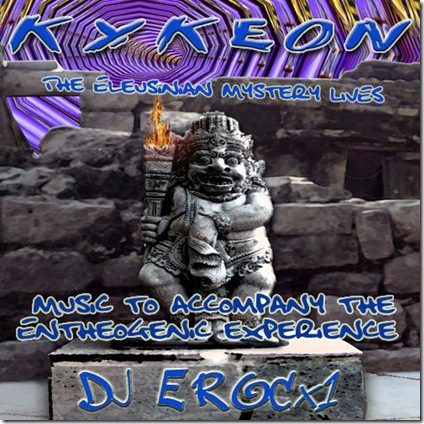
Those of you who enjoyed the entheogenic masterpiece Kykeon: The Eleusinian Mystery Lives will certainly enjoy a new beatless ambient / experimental music set by the UK’s Itzamna Collective. Featuring tracks from the forthcoming motion picture "The Fallow Field" / Exotica: Reinterpreted / Can Am Des Puig - The Book Of Am: Remixed. All available for online listening and free Mp3 Download below. Itzamna Collective is a psychedelic group from the South East of England.
A Perfect Pill: From Neurons to Nirvana is a smart-looking, in-depth analysis and commentary on psychedelic drugs in light of current scientific, medical and cultural knowledge. The film is far from completed.
In partnership with the executive producer Mark Achbar, (The Corporation) and Betsy Carson, and with the addition of our European co-producer, Oval Filmemacher, Berlin, I have been developing and shooting this film over the last two years. We have shot extensively in Canada, the USA and Europe.
We want to get the message out into the mainstream — the validity of psychedelics and MDMA as adjuncts to therapy, as crucial but neglected and taboo medicines, as technologies of consciousness, and as consciousness sacraments.
The Alchemical Dream- Rebirth Of The Great Work [2008]
In the mid-1990's Terence McKenna and Mystic Fire's Sheldon Rocklin teamed up to make this rich and exciting film. Little did they know that this would be their last film. Filmed in Prague with Terence portraying his usual erudite rendition of the Irish Bard, this filmed classic takes us on a journey into the alchemical renaissance of King Frederick V and his wife Queen Elizabeth of Bohemia. Playing the role of John Dee, court magician for Queen Elizabeth of England, Terence McKenna shows us how the promise of a return to the tradition of alchemy was almost instituted in Europe. He also shows us that this early attempt at the creation of an alchemical kingdom actually lead to the European Renaissance and the institution of Cartesian science and the beginnings of rationalism within the western mindset. This incredible film is not only beautifully filmed but is one of Terence McKenna’s finest performances and a worthy eulogy to his genius.
This full length documentary by Critical Mass Productions is now online for free viewing [Hopefully with appropriate permissions]. It may very well not be, so if you can not buy the DVD you may want to download this ASAP.
This film examines the re-emergence of archaic techniques of ecstacy in the modern world by weaving a synthesis of ecological and evolutionary awareness, electronic dance culture, and the current pharmacological re-evaluation of entheogenic compounds. Within a narrative framework that imagines consciousness itself to be evolving, Entheogen documents the emergence of techno-shamanism in the post-modern world that frames the following questions: How can a renewal of ancient initiatory rites of passage alleviate our ecological crisis? What do trance dancing and festivals celebrating unbridled artistic expression speak to in our collective psyche? How do we re-invent ourselves in a disenchanted world from which God has long ago withdrawn? Entheogen invites the viewer to consider that the answers to these questions lie within the consciousness of each and every human being, and are accessible if only we give ourselves permission to awaken to the divine within.
From "Other Worlds" A journey into the heart of Shipibo shamanism
CGI sequences attempt to reproduce the power of Jan Kounen's recurring visions and the unfolding of the poetic story witnessed during an Ayahuasca ceremony.
Read more about the film: Greylodge Free Download: Torrent Format: avi | Size: 651mb
What the BLEEP Do We Know aka WTBDWK!? is part documentary, part story, and part elaborate and inspiring visual effects and animations. The protagonist Amanda, finds herself in a fantastic Alice in Wonderland experience when her daily, uninspired life literally begins to unravel, revealing the uncertain world of the quantum field hidden behind what we consider to be our normal, waking reality.
The film employs animation to realize the radical knowledge that modern science has unearthed in recent years. Powerful cinematic sequences explore the inner-workings of the human brain. Quirky animation introduces us to the smallest form of consciousness in the body – the cell. Dazzling visuals reinforce the film’s message in an exciting, powerful way.
WTBDWK!? Is one of the most successful documentaries of all time. Now distributed in over 30 countries, it has stunned audiences with its revolutionary cinematic blend of dramatic film, documentary, animation and comedy, while serving up a mind-jarring blend of Quantum Physics, spirituality, neurology and evolutionary thought. Its success has spanned a massive extended DVD set ("Down the Rabbit Hole") a companion book, study groups, a resource outlet (BLEEP Store), and a host of transformational films that continue to appear around the world.
For those of you who found films such as The Pharmacratic Inquisition, Zeitgeist & the Addendum interesting, I would like to recommend The Esoteric Agenda. While there are a couple of inaccuracies and some of the claims are are pretty far out. Its maker defiantly does an excellent good job of presenting a possible "big picture" by weaving the Illuminati, occult, world banks, governments, churches and corporations into one giant network of conspiracies.
While I prefer to think along the lines of Terence McKennas idea that "what's even more frightening then conspiracy theory is the possibility that nobody is in charge". However also being a student of Robert A. Wilson, Dr. Hunter S. Thompson and Dr. Timothy Leary's work I believe that governments, corporations, religious and educational institutions have their own dark agendas that by one means or another. Essentially enslave all of humanity for their own benefit. So with that being said, my recommending this film does not mean I believe all of it to be the truth. But the ideas being presented are worth your consideration. If they interest you, do your homework and form your own version of reality. Think for yourself, question authority.




 and Mystic Fire's Sheldon Rocklin teamed up to make this rich and exciting film. Little did they know that this would be their last film. Filmed in Prague with Terence portraying his usual erudite rendition of the Irish Bard, this filmed classic takes us on a journey into the alchemical renaissance of King Frederick V and his wife Queen Elizabeth of Bohemia. Playing the role of John Dee, court magician for Queen Elizabeth of England, Terence McKenna shows us how the promise of a return to the tradition of alchemy was almost instituted in Europe. He also shows us that this early attempt at the creation of an alchemical kingdom actually lead to the European Renaissance and the institution of Cartesian science and the beginnings of rationalism within the western mindset. This incredible film is not only beautifully filmed but is one of Terence McKenna’s finest performances and a worthy eulogy to his genius.